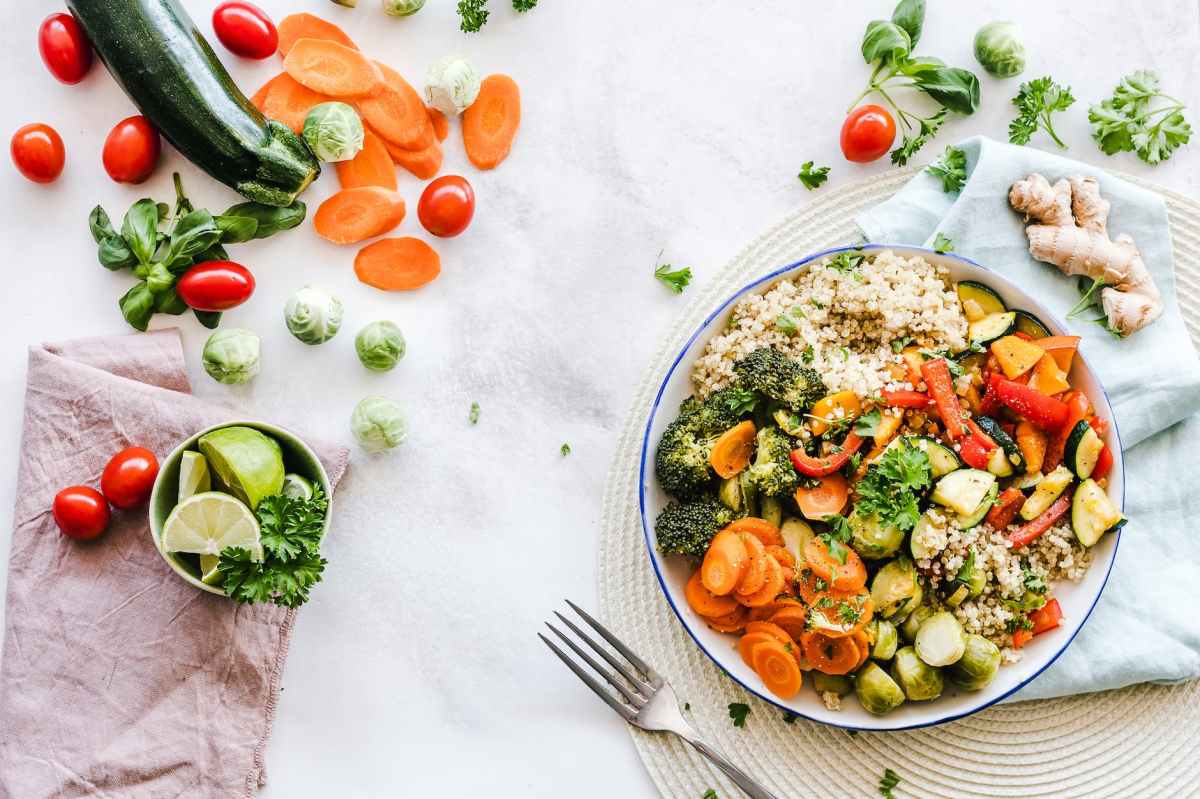
Now that you have the knowledge of what IF is and how it works, we can now move forward to what foods work best for the results you want to achieve. When you incorporate IF, and eat the right foods, you will begin to feel the change in your body. It all actually starts with your mentality and how determined you are to achieve your goals. I can dare say that even if you do not do IF and eat the healthy foods, you will still get results of feeling better and may find it an addictive way of eating. I say addictive because you will be amazed at how wonderful you will begin to feel. Feelings of better health, and your food will actually be tastier. A lot of people think that plant-based eating is nothing more than just eating salads or “rabbit food.” I was one of those thinkers until I was introduced to how and what is involved with eating a plant-based diet. I was then able to experience all the delicious alternatives that can be used in place of those non-healthy foods. When you find certain recipes and see how delicious they are, it will lead you on a search for more recipes to experiment with, experience, and enjoy.
I personally feel that IF is an important implement because of what it has done to my body. As I have mentioned in my previous post about all the troubles I have had to face every single day, they were alleviated greatly when I practiced IF. The great benefits that IF has, has been proven by science to be extremely effective with eliminating many health issues. So, when you do IF and eat a plant-based diet, you will see many benefits such as: weight loss, less inflammation, more energy, cognitive and concentration improvements, and so much more. I recommend doing both, but you should go at your own pace if you are completely new to all of this. It is a big change to you in every way and does take time to get used to this old-fashioned lifestyle. America has become the number one land that has the highest medical issues in the world. It can all be blamed on many things, but as for the food, it is horrendous with all the harmful things that are added to our foods. In a future post I will go into more details about America’s food industry. So, this is why I implement a diet of clean eating as much as possible.
*** This article is for entertainment and informational purposes only****
If you would like to subscribe, please enter your email address below. Anything I post you will receive directly to your email.
I must start off by saying, please consult with your Primary Care Professional, if you have one. The reason being, your doctor should be able to help you find the right dietician/nutritionist and hopefully be able to help you along this journey.
Here is how I started off doing Intermittent Fasting (IF). I started with 12 hours of fasting, which was pretty easy. I like to snack late at night, so that helped me adjust to my new eating times. I would stop eating at ten o’clock at night and would not allow myself to eat again until twelve hours the next day. Most of the time it would be later than ten in the morning. I do want to input that during my fasting time, no matter how many hours I was fasting, I did not eat more than five hundred calories. Now, with these calories, I tried to stay away from processed sugars. What I refer to as processed sugars is: High fructose corn syrup, corn syrup, cane sugar, maltitol, artificial sweeteners, and other processed sugars. Okay, so I’m admitting that all I would have is a cup of coffee. However, my coffee consisted of non-dairy creamer and sugars that are of low glycemic index (organic coconut sugar and monk fruit sugar with erythritol). I usually have my coffee before nine in the morning, so near eleven I would start looking to what I would eat for lunch, then eat by noon. My lunch would be a small portion of a heavy food or just a finger food. Then I would not eat again until five o’clock in the evening. My evening meal would be a normal dinner meal and I would leave my eating window open until ten o’clock that night. Now, this is just how I started prepping my body for fasting. If it takes you longer to jump up to the 16:8, then keep taking those small steps towards your goal.
I do want to add, what you eat also plays a role in what you are trying to achieve. Whether you’re doing IF for weight loss or wanting to clean your body. I will tell you that eliminating anything processed (including sugar), meat, and dairy will definitely help start you on a great path. I did not eliminate all of these at once. Doing this is a major adjustment to your body and mind. You may not be the person who can eliminate all these at once, but start eliminating something so you can start detoxing from that. I also want to warn you that you will experience signs of detoxing, and those signs could be headaches, a rash in various areas of your body, fatigue, body aches, nausea, brain fog, and irritability. You may experience sweating, diarrhea, and cold chills. Everyone may not experience all of these symptoms, but the toxins are released through breathing, bowels, sweating, and urine. Your detox may, or may not, be as severe as others. I personally believe that depending on how much detoxing your body has to expel, will be based on the severity of how much the body rids of the toxins.
Another addition to this start is to drink water. I know a lot of people who have problems with drinking water. Those of you with this issue, start with putting fresh fruits or veggies in your water for taste (do not add sugar). I also do not suggest adding any flavoring packets to your water. Those packets have sugar in them and food coloring. I can suggest a flavoring that is sweetened with a sugar alcohol such as Stevia. If you are a person who drinks sodas all day long, cut back to one a day and do this for about three to 4 days then keep decreasing. Your goal is to get your body rid of sugar and caffeine. You can drink green tea, black tea, and black coffee. All of these can be consumed hot or cold and sweetened with local honey or stevia. Hopefully, the teas and coffee will replace the soda caffeine with a natural caffeine to help with the withdrawals.
I know all this may seem overwhelming, but remember, you will have to mentally prepare for all this before you actually begin. If you truly want to improve your health, then you will be just fine. You could see results as early as a week. Keep a track record of the day you began and what you have consumed. It’s always nice to see progress and what you ate to achieve those goals. Also, keeping a food consumption record could help you track what could be aggravating your body. Overall, keeping a good, detailed journal could help you with your new health journey. I, personally, have found whenever I get off track from my diet, my body lets me know.
********DISCLAIMER******** I AM NOT A TRAINED HEALTHCARE PROFESSIONAL. THIS INFORMATION IS FROM PERSONAL EXPERIENCE AND PERSONAL RESEARCH THAT I HAVE FOUND.
You can subscribe to receive my posts directly to your email, subscribe below.
Plant-based definition, according to Wikipedia, is “a diet consisting mostly or entirely of plant-based foods. Those foods encompass a wide range of dietary patterns that contain low amounts of animal products and high amounts of plant products, such as vegetables, fruits, whole grains, legumes, nuts and seeds.”
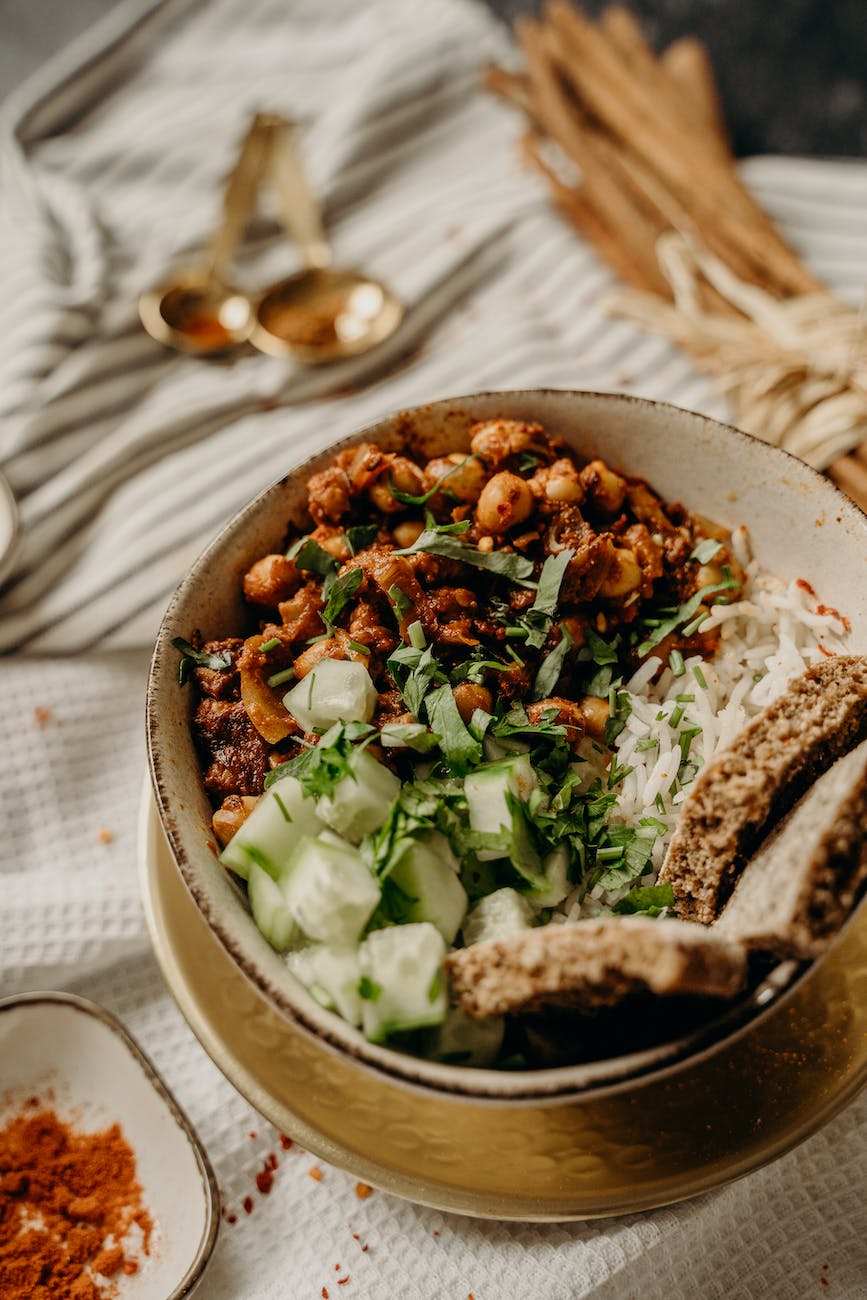
I wanted to put some knowledge out there for those who do not know what these differences are when it comes to healthy lifestyle eating. There are a lot of diets out there that works for some people and for others it does not. However, there are people who want to do something different and achieve great results without spending extra money on a diet plan. When a person decides to make changes to their eating lifestyle, they are automatically aware that there is going to be an extra expense for that achievement. I can personally tell you that since I have implemented plant-based eating, I have saved money. It does not have to be a costly diet to get the results that you want. Here’s why I say it is cheaper to eat healthier. There are a lot of staple foods that a plant-based eater would have in their home. Let me start with beans and legumes. Beans are cheaper if bought dried. Depending on the size of your family, beans can last you for at least a couple of meals. Beans and legumes can be used in many different ways than just being cooked in a crockpot. I have some recipes available that can get you started on plant-based eating meal ideas. Beans are not the only plants that are a very versatile food. Nuts and seeds can be used in many different ways to incorporate into your recipes. And lastly, fruits and veggies, we all are very familiar with those and know how to cook with them. So, with this small insight of explaining how plant-based is cheaper compared to buying meat.
I personally do not totally agree with Wikipedia’s definition. My definition of plant-based eating is only eating foods that are grown from the earth. Foods such as fruits, vegetables, whole grains, nuts, seeds, legumes, beans and oils. I do not agree that animal products are a way of plant-based eating. This lifestyle does not mean you are vegan or vegetarian. Plant-based is not choosing to eliminate all meat, dairy, and processed products but rather eating more from plant sources.
Vegan (partial definition) from Wikipedia, “the practice of abstaining from the consumption and use of animal products.” See Wikipedia for the full definition.
Another definition of vegan is all animal products including meat, poultry, fish, eggs, dairy, and honey are excluded from the diet. Lots of vegans do make exceptions and consume honey and other foods such as oysters since the farming is good environment. But keep in mind, like with any diet, personal decisions play a huge factor. Depending on that individual, some avoid foods using parts of an animal for manufacturing. For example, granulated sugar is made using cattle bone char.
Lastly, with veganism, a thing to note about this lifestyle, most people who categorize themselves as vegan do not use anything that has animal products in it, such as skincare, haircare, clothing, and furniture.
Vegetarian from the version of Wikipedia says “vegetarianism is the practice of abstaining from the consumption of meat. It may also include abstaining from eating all by-products of animal slaughter. Vegetarianism may be adopted for various reasons. Many people object to eating meat out of respect or sentient for animal life.”
So, the overview between vegetarian and vegan is, vegetarians don’t eat any food products made from meat, fish, shellfish, game, crustacea (such as prawns or crab) or by-products of animals. Vegan is much stricter who also avoids all meats, fish, poultry and by-products of animals, but also restricts all dairy and all dairy derived products from animals, including eggs.
More lifestyle eating labels
There are some people who will follow the guidelines of any of the two eating habits listed above, and those people are in one of the two categories of Flexitarian or Pescatarian. I’ll explain below what those two are and what is involved with that lifestyle.
Flexitarian – a person who usually follows a vegetarian diet but does allow themselves to eat eggs, seafood & fish, meat, poultry and dairy occasionally.
Pescatarian– a person who eats eggs, dairy products, fish and seafood but restricts all meat and poultry.
In my opinion, flexitarian or pescatarian would be a great start for someone who wants to transition into a healthier lifestyle of eating. It is not easy for some people to just quit eating meat or dairy in just a day or a week. Especially if you grew up having meat on your plate with every meal. All it takes is a conscious effort to improve yourself. Changing your diet is not the only thing that takes effort to adjust when we have been conditioned to think something is good, but find it is not. There are many organizations that has misinformed us all of our lives. Making changes is not always easy because it takes us out of our comfort zone, and it’s okay to feel that way, as long as you have the willpower to make that change for your overall well-being.
In conclusion, I hope I have given you some knowledge on different lifestyles of eating and to not be afraid to make that step towards a healthier lifestyle. I, myself, am not perfect and struggle sometimes with sticking to just one category of lifestyle of eating. However, I do put in great effort to fast as much as possible and stick to my plant-based diet. A plant-based diet is the one diet that my body has benefited the most from.
****DISCLAIMERS****
I am not a healthcare professional in any manner. I advise you to speak with your doctor prior to making any decisions concerning your diet.
This post is from my personal research and experience that I want to share.
I do not receive any type of commission from Wikipedia for posting links or using reference for their website.
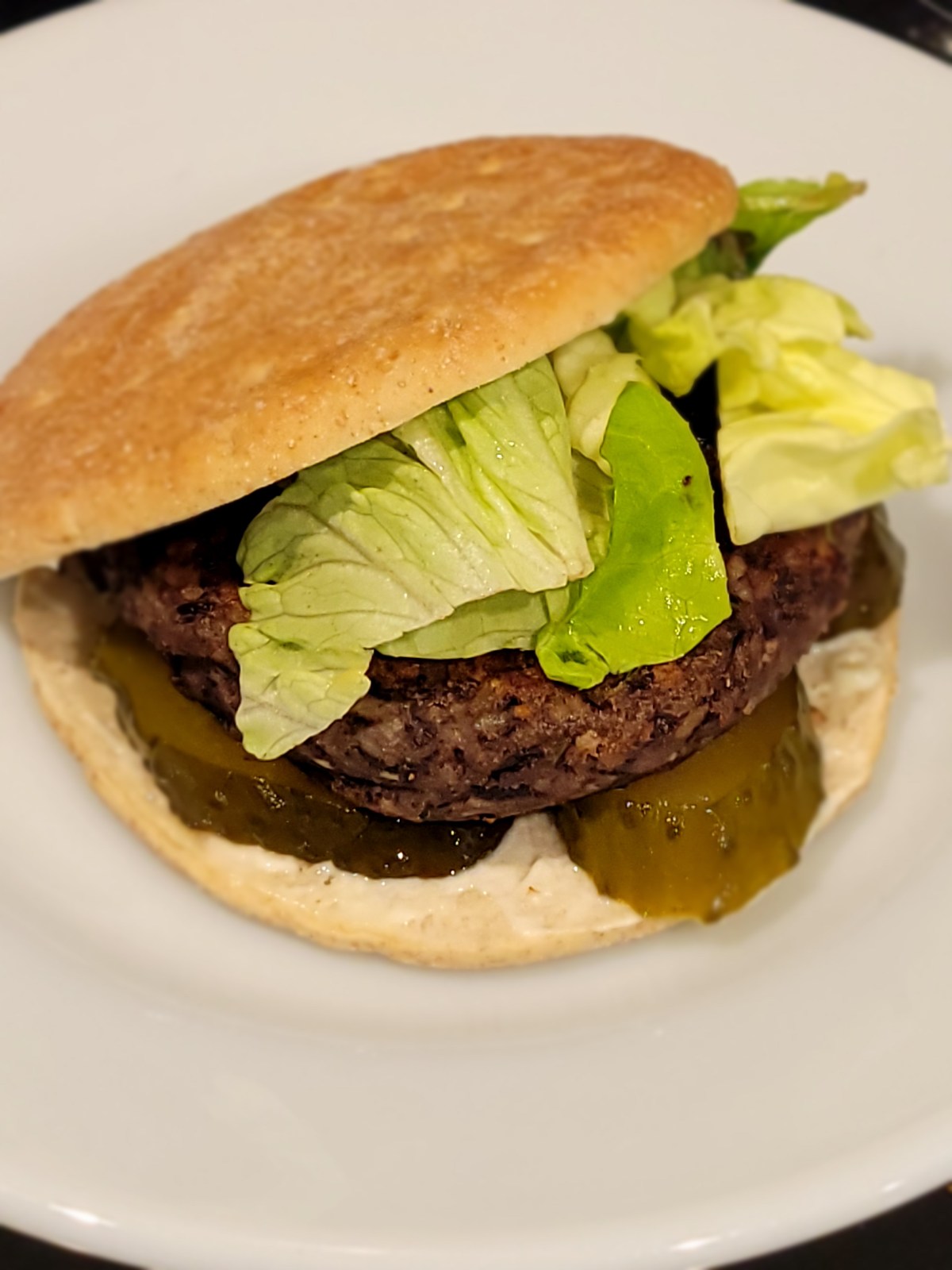
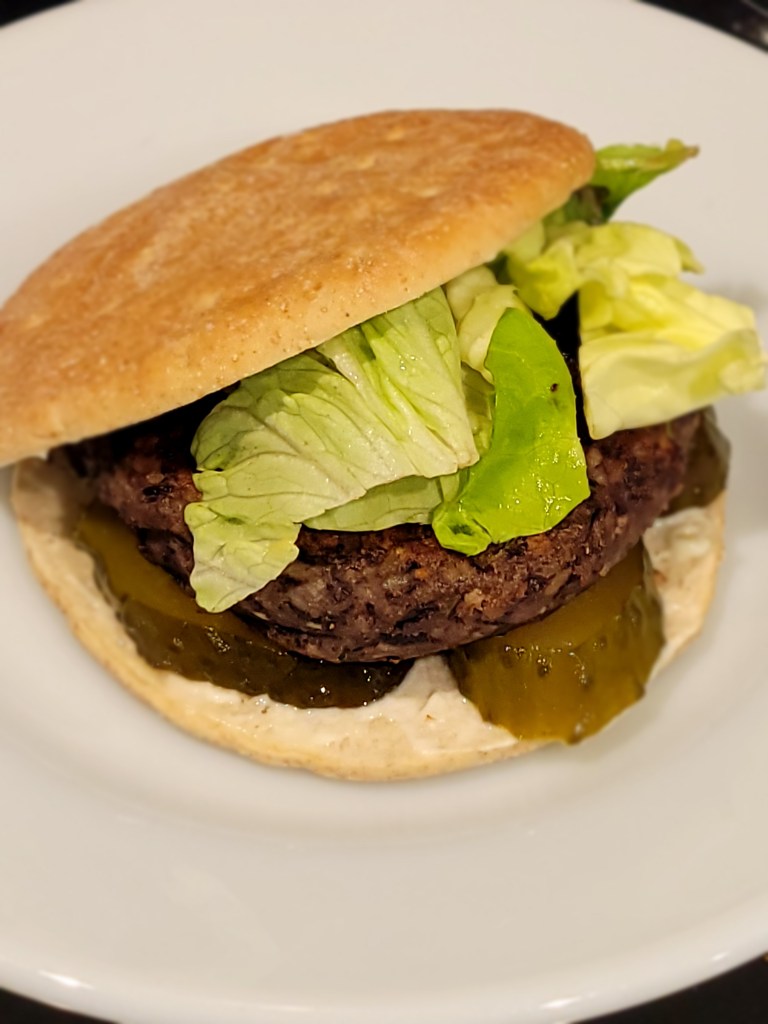
This black bean burger recipe is, so far, the best I have ever tasted. It is better than the famous box brands. This recipe uses fresh ingredients for the most part, but, all can be fresh if you cook your own black beans in place of using the canned. The one tip that I can give about this recipe is to be sure the beans drain at least 20 minutes to avoid having “too moist” burgers. I have only cooked these on the stove in a skillet, but I’m most certain that these will taste just as good on the grill or oven. This recipe can also be used by anyone who just wants a break from meat, but also wants a delicious alternative to meat. This recipe is a five star in my household.
Black Bean Burger Recipe
Ingredients Makes 6- 3 1/2″ wide patties
2- 15oz cans black beans, rinsed and drained (reserve 6 TBSP of the liquid)
Be sure beans are rinsed and well drained and allow them to sit in the colander for 30 minutes.
Whisk reserved bean liquid and flour in a large bowl until well combined and smooth. Stir in scallions, salt, and pepper until combined. Process tortilla chips in food processor until finely ground. Add beans and pulse until beans are coarsely ground (about 5 pulses). Transfer bean mixture to bowl with flour mixture and mix well.
Divide mixture into six portions having 6 firmly packed patties. Heat 1 TBSP oil in a nonstick skillet over medium heat. Lay 3 patties in skillet and cook for 5 minutes, or until browned. Flip and repeat the process (including the oil) prior to cooking the other side.
To keep patties warm while cooking the remaining patties, adjust oven rack to middle position and heat to 200 degrees. Place cooked patties on a rimmed baking sheet in the oven to keep warm.
**Cooked patties should not be mushy or fall apart**
Note: The recipe above is how I make mine, the PDF is from the original source, “Vegan for Everybody” recipe book by America’s Test Kitchen. Here is the link if you are interested in purchasing.
The PDF is below if you choose to download or want to print it for your recipe book of favorite recipes. To download recipe, touch the black “download now” button.
****DISCLAIMER**** I do not receive any type of commission for anyone who clicks the link or makes a purchase with Books-A-Million.
**** If you subscribe, leave a comment or fill out a form with my blog. I can confirm that your email address and any information you leave is secure with me and WordPress.com.
If you have read my previous blog “what is IF” then you have a small idea of what it is and how it is different from Deep Fasting (DF). This post I will go into details on how IF works, what changes I made to my diet, and what method I used most. I will also post App(s) that I used to help me keep track of my time. Links that I display, or Apps that I suggest, I do not get any type of incentives. Hopefully, down the road, I can make that possible.
Now, let’s move forward. Most Americans’ normal eating cycles differ greatly with IF, especially if they eat throughout their waking hours. In this nation, most people eat three meals a day, plus snacks. So, every time they eat, they are running on those calories and not burning the fat that is stored in the body. This is how weight is gained.
There are several different ways to customize IF to work for you, but they all are based on choosing a set time schedule to eat and fast. This is referred to as Time Restricted Fasting (TRF). The fasting timeframes start as low as 13 hours fasting and 11 hours eating. (The 13:11 window. This time frame is a great first step into introducing IF to your body and mind.) Next is the most commonly used timeframe, which is the 16:8. Others are 18:6, 20:4, and One Meal A Day (OMAD). Once you hit 24 hours of fasting, you will begin the process of getting into the Deep Fasting Stage (DFS). The longer you go, the more health benefits you will reap. It does sound crazy and unachievable, but it IS achievable. Many people have been able to do this, so it is not rare at all. I have a chart below that you can visually see the timeframes.
There is another method of fasting than just hours in a day, I call it, Ratio Fasting (RF) 5:2. This eating for five days and fasting for two. However, you can make your RF how you desire to fit your needs or goals. The charts below can give you a visual idea of how all this works.
When I started IF, I did start at a low timeframe and worked my way up to my goal. I, at times, did unintentionally exceed my goal, but I reaped the rewards of feeling so much better, especially the next day. The main timeframe that I use is the 16:8. Once I get myself back into the swing of fasting again, it’s much easier to maintain. I TRY not to stray away from fasting too long. When I implement my fasting, I normally do it about four or five days a week. In the beginning, I did just two days a week, and then worked my way up. I thought it would be hard, but it truly wasn’t. Implementing IF has done wonders for me and my overall health. I am certainly happy that I gave it a try. The App that I have been using to help track my time of fasting is Zero. It is free with both Apple and Android phones. However, there are other fasting apps you can choose from to use, but of course, use what benefits you most.
In conclusion, IF has been studied by many doctors who have tried and recommended it to their patients who have various health issues to serious health concerns. All patients who did participate in IF had extremely positive life changing results. However, there are many Healthcare professionals who are not aware of how incredible fasting is for one’s body, and how it can allow your body to naturally heal itself, just as it was designed to do. Now that you have an idea of how IF works, I hope this will help you on choosing a timeframe, or even customizing it to fit your daily routine. With IF you can start the journey of living a heathier life. My next post will be what foods are suggested while inside your eating window, plus what happens to our bodies when we fast.
***DISCLAIMERS***
I AM NOT A TRAINED HEALTHCARE PROFESSIONAL OF ANY SORT.
ALL INFORMATION ABOVE IS FROM MY OWN PERSONAL RESEARCH AND PERSONAL EXPERIENCE.
FASTING OF ANY KIND IS STRONGLY DISCOURAGED FOR CHILDREN AND THOSE WITH EATING DISORDERS.
Intermittment Fasting (IF) is any various meal timing schedules that cycle between voluntary fasting, and non-fasting, over a given period. (Wikipedia definition) The methods of IF include: alternate-day fasting, periodic fasting, and daily time-restricted feedings. John Hopkins School of Medicine says research show that IF is a way to manage and prevent, or even reverse, some forms of disease. Many diets focus on what you eat, while IF focuses on when you eat. I do agree that it is very important to monitor what you eat, because it is a major factor in your daily health eating habits. It’s much harder today, than 50 years ago, to maintain a good healthy weight. Today, we are presented with larger food portions and processed foods. Let us not forget that we have all sort of 24/7 entertainment available, which contributes to many adults and children staying awake longer. Staying alert longer means more sitting and snacking, versus 50 years ago when the TV was off at 11pm and children played outside. Many people have made this transition slowly, without even realizing it. If you think about it, this transition was slowly made over decades. Now it is considered a normal part of life with how, and what, we eat. We also have a higher percentage of all kinds of diseases now than 50 years ago.
So, you’re probably asking what the difference is between Fasting and IF. Well, I did a little research and found some pretty good information on Simple Roots Wellness website (SRW) that I agreed with the most. SRW said that there is a HUGE difference between IF and Fasting, they label fasting as Prolonged fasting. Their approach to fasting and IF is, IF should be considered a normal way of life and not in itself fasting. Fasting is going three to five days without food, or with very little of it. There are pros to IF for everyday health, but the Prolonged (Deep) fasting is where the massive health benefits are found. https://simplerootswellness.com/intermittent-fasting-vs-prolonged-fasting/
Prior to my knowledge about IF, I always thought that fasting was not eating for three days or more, which is true, BUT, I did not know fasting could pretty much be customized to achieve the prolonged fasting, which I like to refer to as DEEP FASTING. I also thought that fasting was only for Biblical reasons, which is also true, but there are many reasons in Biblical fasting, as well. (Fasting and the Bible I will save for a special post at another time) I personally have not completed more than 26 hours of fasting, and that only happened once by accident.
Overall, either of these fasting methods are very beneficial in weight loss, or just trying to improve your health. Improving your health is not always about losing weight, though a majority of the time, that is a person’s goal. There are some people who want to get toxins out of their bodies quickly so, when they eat the correct foods, those foods can be absorbed to be beneficial to their health. In my personal experience, IF has been the best for my weight loss, and it boosted my overall health. In my next post, I will go into more detail about how IF works and what is the most used method.
****DISCLAIMER**** I am not a trained Healthcare professional of any sort. Please talk with your HCP when you want to make any changes in your diet. This post is just my research and personal experience.
My name is Chantel Chansa, I created this blog as a place to share all the things that I am passionate about. Topics that I chat about, I have either researched, used my knowledge, experienced or all three. I have had many people to ask questions regarding things that I have knowledge of. So, I thought that a blog would be a great way to share with them along with others like you. Here you will find information on various topics as this blog site grows. I would like for my site to be a place where learning is explored, and knowledge is taught. I hope that you will find it useful for yourself, your family, and friends. I thank you for taking your time to read what I am led to share.









 Chatty Chansa